DrupalCon Europe’s Government Summit is designed for tangible collaboration

After more than two decades in journalism, Alison now collaborates with Annertech's clients to ensure that their content is the best it possibly can be.

Government web teams are rising to meet monumental challenges together: delivering better online services with limited resources, modernising legacy technology, ensuring accessibility and protecting digital sovereignty. They’re also figuring out how open source technology can help them do all of this sustainably.
It makes the Government Summit at DrupalCon Rotterdam particularly timely. Taking place on Monday, 28 September, the full-day event brings together people working across local, national and European governments. Attendees will explore the common challenges facing public-sector digital teams and, importantly, share the solutions that are already working.
Our own Tony Barker is co-organising the summit and is helping bring together a programme designed for tangible collaboration that people can take back to their organisations for more efficient action.
“We’ve found that some of the most useful conversations at an event like this happen when a council web manager compares notes with another council. When a government digital team discovers that someone else has already solved the problem they're wrestling with. Or when an idea from one country sparks a completely different approach somewhere else,” says Tony.
The summit's format is designed to encourage those conversations. Alongside scheduled talks and panels, attendees will have opportunities to contribute through unconference breakout sessions, giving participants a chance to raise issues, share experiences and explore topics that matter to them.
A summit built around collaboration
Government organisations may operate at different levels and in different countries, but many of the digital problems they face are remarkably similar.
The programme brings together voices from across government, open source and the Drupal community. It gives the organisers an opportunity to move conversations beyond individual projects and towards the bigger picture of digital government.
Initiatives involving the UK Government Digital Service, the European Commission and accessibility leaders are creating structures for organisations to work together at a much higher level, sharing approaches, standards and solutions that can be taken back into national and local programmes.
For example, the panel discussion “Can local government build and sustain the digital commons it needs?” will bring together perspectives from across the public sector and open-source community. This will include Phil Rumens, Principal Technologist at GDS Local, and Mike Gifford of CivicActions, alongside Justine Pocock from Chicken and Will Callaghan of LocalGov Drupal.
This panel reflects a wider shift towards formalising collaboration around shared digital challenges – and it’s a shift that is being carried out across this summit.
What can happen when you stop reinventing the wheel?
One of our highlights is a presentation from Jayvik Patel, Strategic Digital Services Manager at Luton Borough Council.
Working with Annertech, Luton Borough Council moved from a legacy platform to a modern, user-focused website built on LocalGov Drupal. The project launched its public beta in just 11 weeks, with the full website following 14 weeks later – putting the complete transformation at around 180 days.
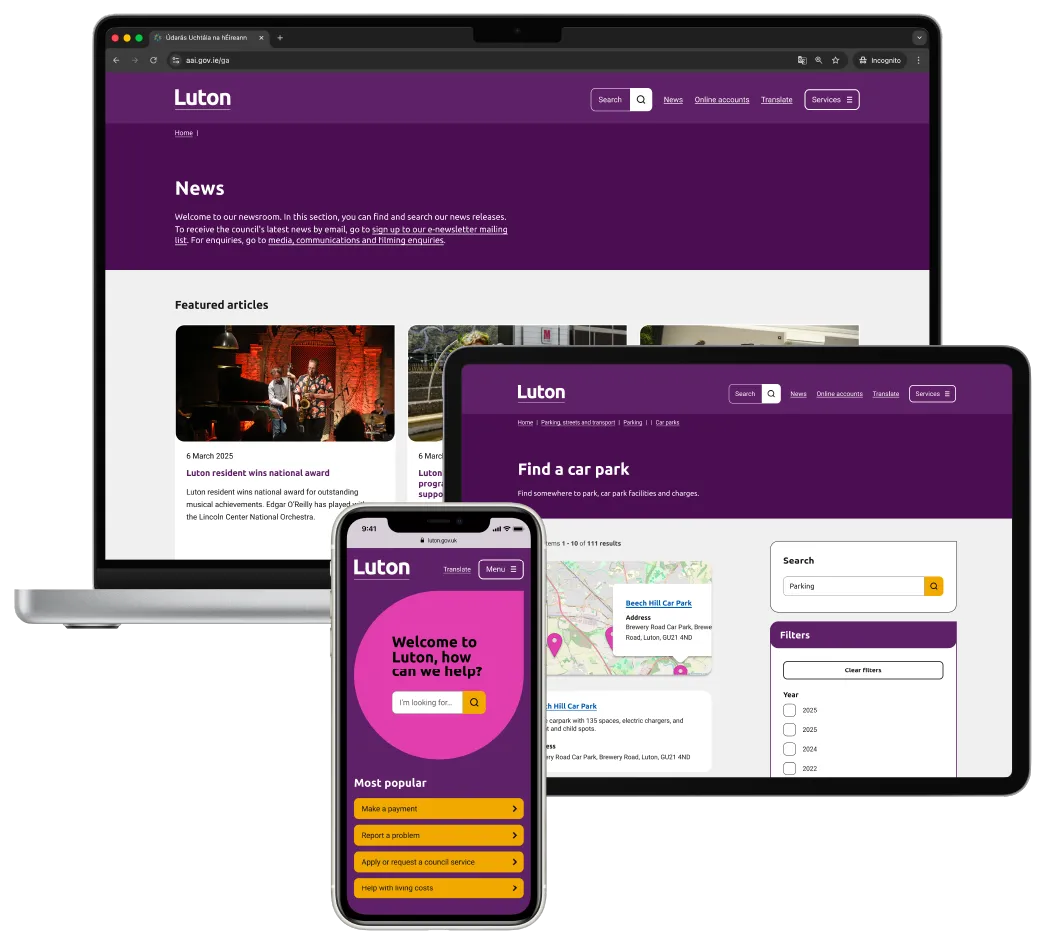
But the impressive timeline isn't really the point. The more interesting story is how Luton achieved it. Rather than starting from scratch, the team was able to build on the shared foundations of LocalGov Drupal. That meant established functionality, patterns and approaches could be reused, allowing the project team to concentrate its time and effort on the things that were specific to Luton and its residents.
It's a powerful example of what open-source collaboration can mean in practical terms.
For councils facing aging technology, limited budgets and growing expectations from residents, the question isn't simply: How quickly can we launch a new website? It's also: How much work do we really need to do ourselves?
Why government teams should be paying attention
The Government Summit provides an ideal environment to explore where the open source model can go next – particularly as government organisations across Europe look for ways to reduce dependency on proprietary platforms, improve digital sovereignty and make increasingly stretched budgets go further.
Governments are under pressure to deliver more digital services, more quickly and at lower cost. At the same time, they're increasingly thinking about digital sovereignty, resilience, accessibility and the long-term sustainability of their technology choices.
Open source can't solve every one of those challenges. But it can provide a different way of thinking about them.
That's the bigger conversation happening at the Government Summit.
After more than two decades in journalism, Alison now collaborates with Annertech's clients to ensure that their content is the best it possibly can be.
Related Blog Posts
-
-
 23 September 2026
LGD helps councils build better sites at lower cost
-
 18 August 2026
A year in the LGD Developer role. What can we achieve today?
Join us in Rotterdam
For Annertech, the Government Summit is an opportunity to continue a conversation we're already deeply involved in: how can open source help government organisations deliver better digital services for the people they serve?