Preserving Welsh heritage through a modern, digital platform

Drupal Development
User research
For more than a decade, the People's Collection of Wales (PCW) has helped preserve and share the rich cultural history of Wales through a vast community-driven digital archive. From photographs and oral histories to videos, documents and personal stories, the platform enables people across Wales and beyond to contribute to a living national collection.
However, with the site still running on Drupal 7, the platform faced increasing technical and security challenges, alongside growing user expectations around accessibility, mobile usability and modern digital experiences. Annertech was engaged to lead the migration to Drupal 10 while preserving the functionality and community workflows that made the platform so valuable to its users.
PCW needed a modern, future-ready platform that:
- successfully migrated more than 170,000 heritage records,
- retained complex user contribution and mapping functionality,
- improved the experience for contributors and researchers, and
- positioned the People’s Collection of Wales for the next generation of digital storytelling.
Background
PCW is a vital, collaborative digital project, dedicated to safeguarding and sharing the captivating cultural tapestry of Wales. Launched through a governmental initiative, it’s more than just an archive: it’s a living, breathing platform where locals and the global community can explore, contribute and connect with Welsh history, art and culture through a rich array of photographs, documents and stories.
At its heart, PCW is committed to breaking down barriers, using digital technology to make Welsh heritage accessible to everyone. Its user-friendly interface allows visitors to easily navigate diverse collections, search for specific treasures and explore interactive maps that anchor historical artefacts to their geographical roots.
Crucially, PCW champions public participation, empowering individuals and communities to upload their own stories and artefacts. This approach not only dramatically enriches the collection’s diversity but also forges a powerful sense of ownership among the Welsh population and diaspora, turning a national archive into a truly communal treasure chest.
The need for an upgrade
The PCW website had been running on Drupal 7 since 2013. While the project has successfully managed the site’s development in-house since 2017 and it is currently hosted by Acquia, the reality of an ageing platform made a significant upgrade necessary. The site’s reliance on Drupal 7 necessitated a move to a modern, supported framework to ensure security, performance and future-proofing.
PCW engaged Annertech to undertake the comprehensive migration of its contents from the Drupal 7 site to the latest stable version of Drupal, which was Drupal 10 at the time of writing. This ambitious project involves not just a content migration but also the recoding of custom modules and site templates to be fully compatible with the new Drupal version.
People’s Collection Wales is a unique national digital archive, preserving and sharing the rich cultural heritage of Wales through community contributions, photographs, documents, stories, audio and video. It was therefore essential that any redevelopment protected the integrity of the collection while improving the platform for the future. Annertech understood this from the outset.
Retaining core functionality and user engagement
A key mandate for the redesign and migration was the retention of all existing core functionality. Simply put, PCW did not want to disrupt the way their engaged user base interacts with the site.
The existing structure centres on users registering and logging in to engage with three main content types: “items“, “stories“ and “collections“.
- Items: This constitutes the main bulk of the collection, comprising videos, audio, documents and images. Users are encouraged to upload items, contributing directly to the history of Wales.
- Collections: Registered users can take individual items and group them together to form a collection.
- Stories: Users can take individual items/collections and group them together to form a story with a narrative account.
This interaction is highly dependent on robust metadata, as all items are extensively tagged with metadata across various categories, including a date tag, which allows users to search by date or category.
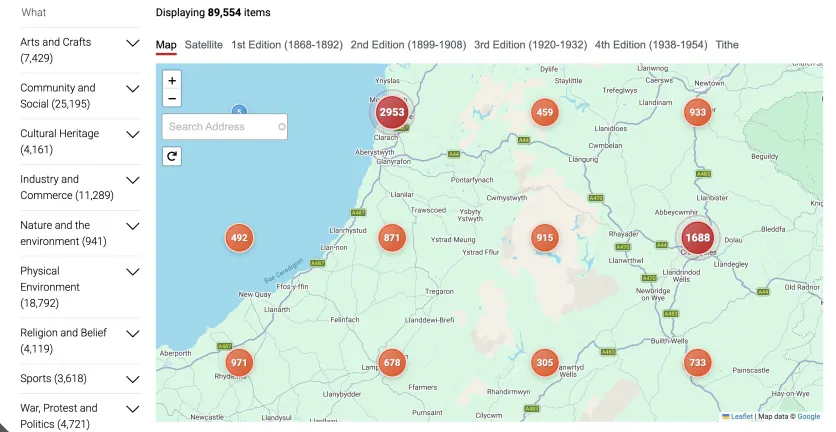
Furthermore, the existing Maps functionality is critical, enabling users to geolocate items, collections, or stories. The map even incorporates a timeline feature, allowing visitors to view older versions of the map.
A research/learn section is extremely useful for teachers and adult learners. Teachers are able to search the website’s resources by age and curriculum area. A handy Teaching Toolbox offers practical help with the Digital Competence Framework.
Adult Learners can navigate to the Lifelong Learning tab to see resources and training courses to learn more about digitising Welsh heritage.
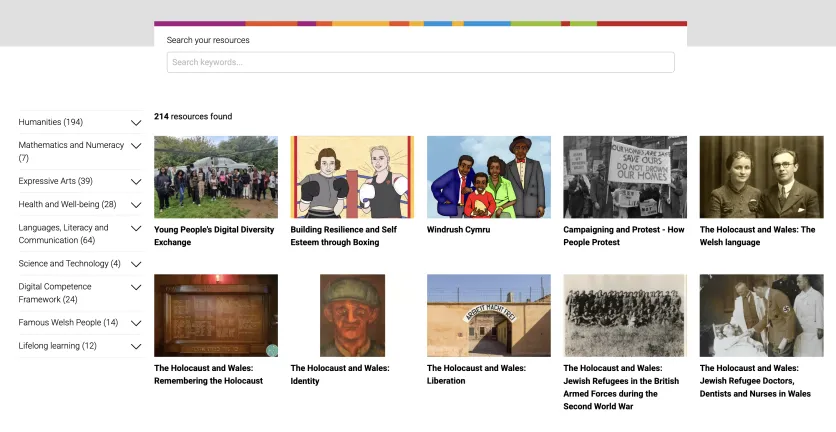
While the primary goal was to retain this established, interactive functionality, the project also provided an opportunity to improve the user experience both on desktop but particularly on mobile devices, modernise the user interface and bring the client’s branding more prominently into the design.
What our client says
One of the most impressive aspects of the project was the way Annertech balanced technical modernisation with continuity for our users. They did not simply rebuild the site; they took the time to understand how people use People’s Collection Wales.
Our approach
Given that the core functionality of the People's Collection Wales (PCW) website was already well-established and valued by its users, our primary focus was on enhancing the Design and User Experience (UX) while ensuring a seamless and efficient migration to Drupal 10.
Design and user experience
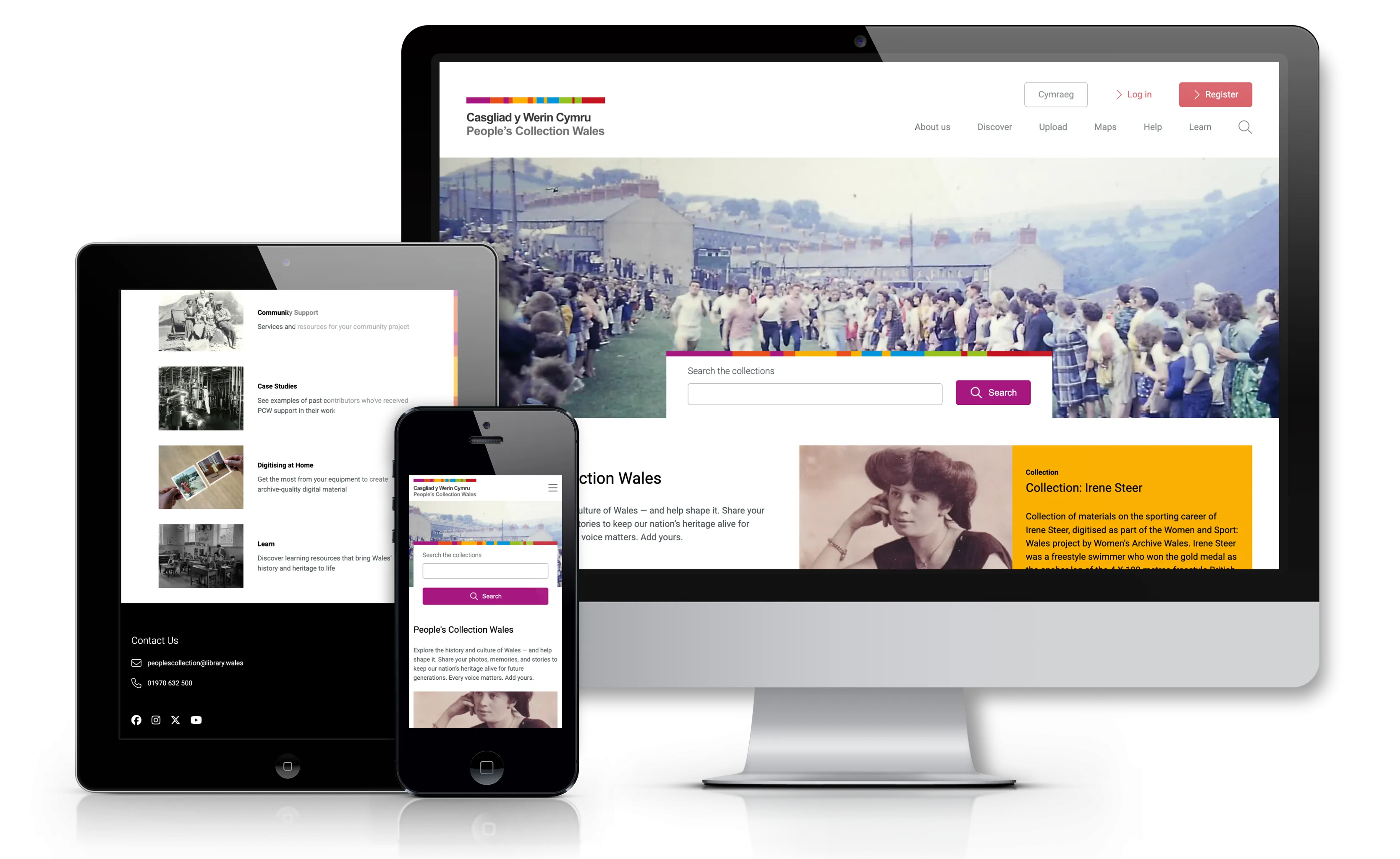
Our team conducted a thorough UX analysis of the existing Drupal 7 interface. This analysis revealed that, while all necessary information and features were present, elements had been added without proper visual hierarchy or prominence, and the site did not perform well on mobile devices. Our design team worked to resolve this by redesigning the interface to be clearer and more engaging, all while rigorously retaining the existing functionality.
Key design improvements
- Visual hierarchy and item display: We made better use of the extensive tagging functionality to display more facets of an item clearly, presenting essential information (description, maps, user info, views, favourites, related content) in a structured, accessible manner.
- Branding integration: The brand identity for the People’s Collection Wales is intended, quite literally, to represent the DNA of Wales and its people. We subtly yet effectively integrated PCW's branding, notably introducing the DNA branding as the main identity across components (hero area/search/footer) and as a visual hover effect across the site.
- Grouping user functions: Functions crucial for user engagement, such as Add to a collection, Save to favourites, Download, or Share, were already present but not immediately apparent. We grouped these user actions together, giving them prominence and using a distinctive colour taken from the logo palette to make them easy to locate and use. Information about the item was then clearly situated underneath these primary action buttons.
- Image aspect ratios: We also reduced the number of different aspect ratios for imagery across the site for consistency.
Process and user flow improvements
Our process began with wireframes to define the structural and interaction changes. A major area of improvement was the experience for logged-in users, specifically around the content contribution workflow.
- Improved menu and user dashboard: The logged-in user experience was significantly changed and improved with a cleaner, more intuitive menu. This new menu separates key activities into distinct sections: Profile, Upload, Drafts, Favourites, Statistics and Logout.
Simplified upload experience: The user flow for uploading an item was drastically simplified to be less overwhelming for contributors.It begins with a clear landing page where users choose the format they wish to upload: images, audio, document, video, collection or story.
This choice opens a significantly improved form. We simplified the initial form fields, separating necessary options from Advanced options, which are available but not mandatory upfront.
Although the submission workflow already offered stages like Save Draft, Submit for Moderation and Publish, the display of Draft items was hidden at the bottom of the Upload page. As part of the overall flow improvements drafts were made clearly available with their own screen and clear menu link.
As part of the wireframe stage we also agreed on a set of content components that the PCW team could use to structure and manage their static content pages consistently.
Following the structural definition, we moved to visual design, creating mockups of all unique screens for approval. This stage focused on the overall look and feel, visual prominence and successfully integrating the branding into the designs.
All components and page layout were carefully designed with scannability in mind and the use of blank white space which also helped maximise the design effect of the colourful bar from the logo.
Application Programming Interfaces
PCW works with some partners, giving them direct access to the items and stories within the collection. To facilitate this, we developed a REST API allowing both read and write access to the site. On request, users are given appropriate credentials and documentation allowing them access to the API.
New media, items and stories can be added in bulk, facilitated with a custom moderation system.
Tight integration to the search is also available allowing resources to be searched off-site, with appropriate links back to the collection as required.
Managed Services handover
Upon completion, the newly migrated and recoded site was deployed to Acquia Cloud, with content reindexed and comprehensive documentation provided to the PCW project manager. The expected outcomes on handover were:
- A fully recoded, bilingual Drupal 10 deployment that was responsive and meets accessibility standards. The design was based on a provided site prototype and adhered to modern best practices for SEO.
- Complete migration of all existing content and users from Drupal 7 to Drupal 10.
- Upgraded custom modules while adhering to modern PHP standards and implementing the new template for the front end.
Results
The extensive work in migration, recoding and redesign culminated in several key achievements for the People's Collection Wales website:
- Migration success: We successfully migrated a massive amount of content – nearly 170,000 items – ensuring continuity and preservation of the entire digital collection. This included
- Items (162,000)
- Collections (3,500)
- Users (1,500)
- Stories (850)
- Platform modernisation: The People's Collection Wales website is now running on the latest stable version of the framework, Drupal 10, providing a secure, performant and future-ready platform.
- Enhanced user experience: The site features a redesigned, modern interface that retains all existing functionality while drastically improving clarity, accessibility and user engagement, particularly in the critical content contribution workflows. The website was given a Grade A by GTmetrix and has a performance score of 99.
What our client says
We are very pleased with the final result. The project has helped ensure that People’s Collection Wales can continue to preserve, celebrate and share Welsh heritage for communities across Wales and beyond.
Conclusion
Migrating the People's Collection Wales to Drupal 10 was far more than a technical upgrade. It was an opportunity to modernise a nationally important cultural resource while carefully preserving the community participation and storytelling at its core.
By combining large-scale content migration with thoughtful UX improvements, Annertech delivered a bilingual, accessible and future-ready platform capable of supporting both public engagement and long-term digital preservation. More than 170,000 records – including items, collections, stories and user accounts – were successfully migrated without disrupting the established workflows relied on by contributors, educators and researchers.
The redesigned platform provides a clearer, more intuitive experience across desktop and mobile, simplifies the contribution process for users and creates a stronger foundation for future development, integrations and community collaboration.
Built around your users
We don’t just rebuild websites. We take the time to understand how people actually use them, then design and develop digital services that are clearer, faster and easier for everyone.