From AI to digital sovereignty: what we learnt at DrupalCon Rotterdam

After more than two decades in journalism, Alison now collaborates with Annertech's clients to ensure that their content is the best it possibly can be.
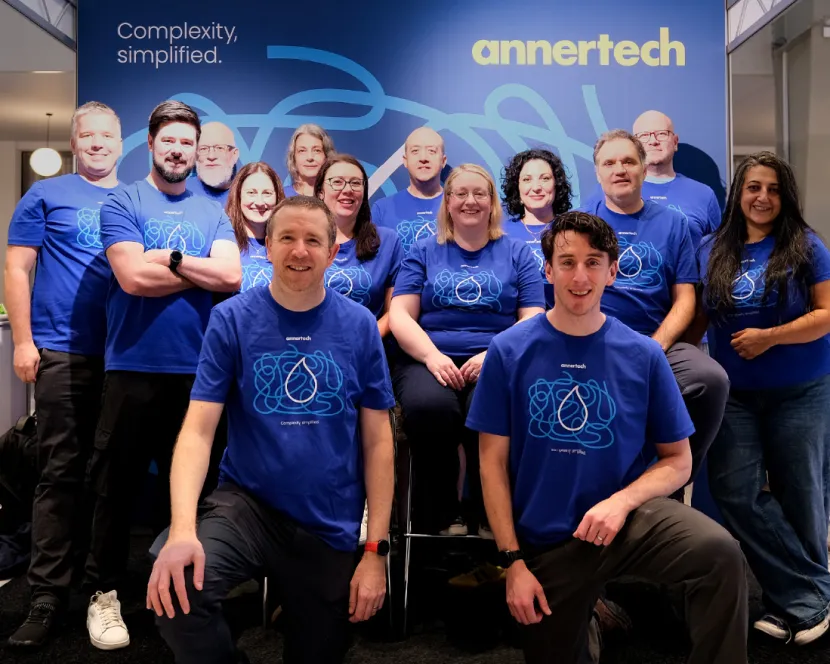
When the global Drupal community gathers, you can always count on two things: deep technical insights and an unforgettable time. DrupalCon Europe 2026 in Rotterdam was no exception!
The refreshed format gave us an action-packed week of learning and connecting. Now that the dust has settled and the coffee high has worn off, we have taken time to digest the key themes, practical takeaways and standout moments from our week in the Netherlands.
From cutting-edge AI strategy and digital sovereignty to accessibility best practices and the power of community, here is what we learnt at DrupalCon Rotterdam 2026.
Annertech was a Gold Sponsor of this iconic Drupal conference from 28 September to 1 October 2026. The format was switched up a bit this year, with the addition of specialised summits on the 28th, two session days on the 29th and 30th, and contribution day on the 1st of October.
“I really enjoyed both the Government Summit and DrupalCon,“ said Delivery Manager Sav Monzac.
“It was great to not only hear but see what is happening in the Drupal community and how governments in other countries and large enterprises are using Drupal.“
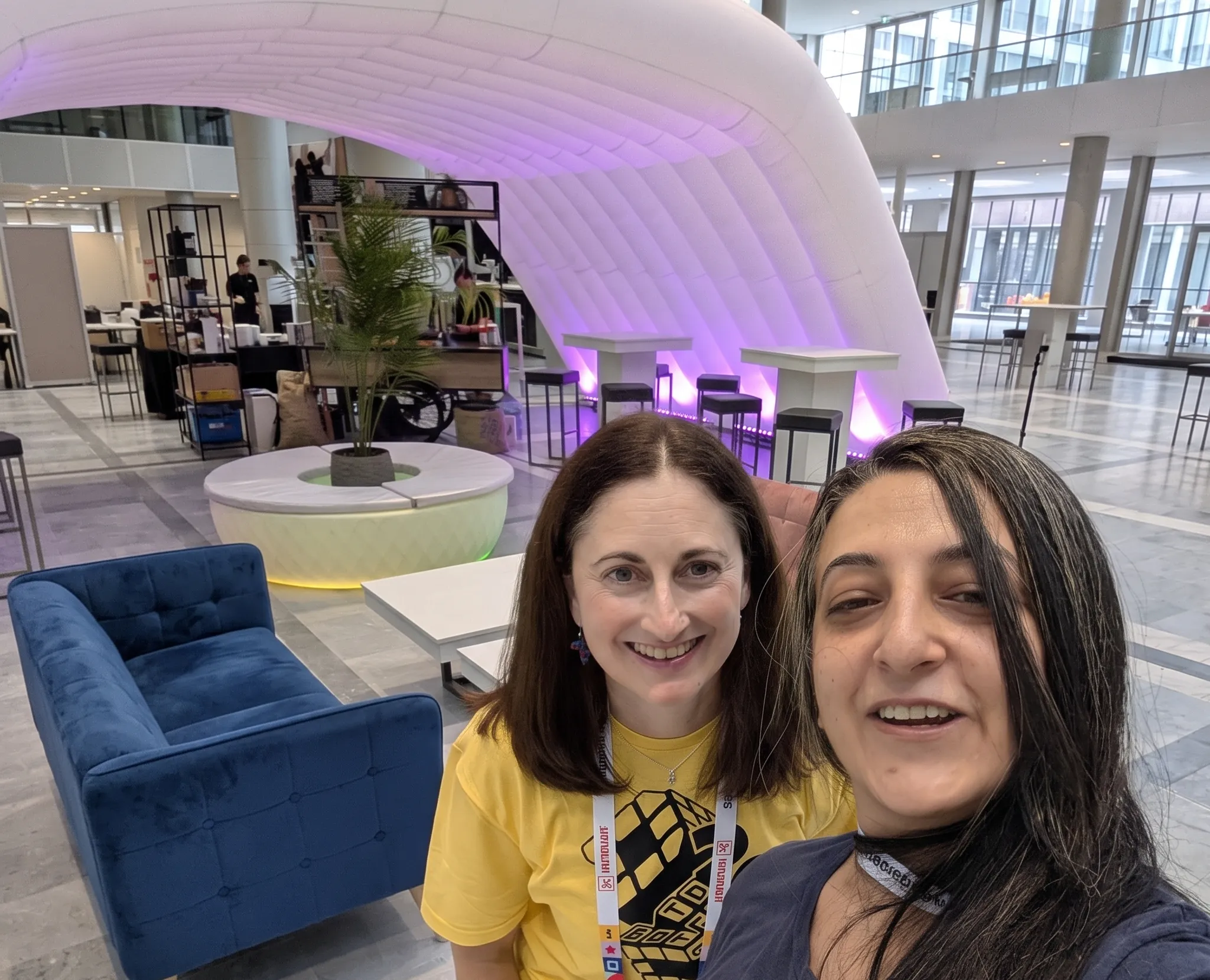
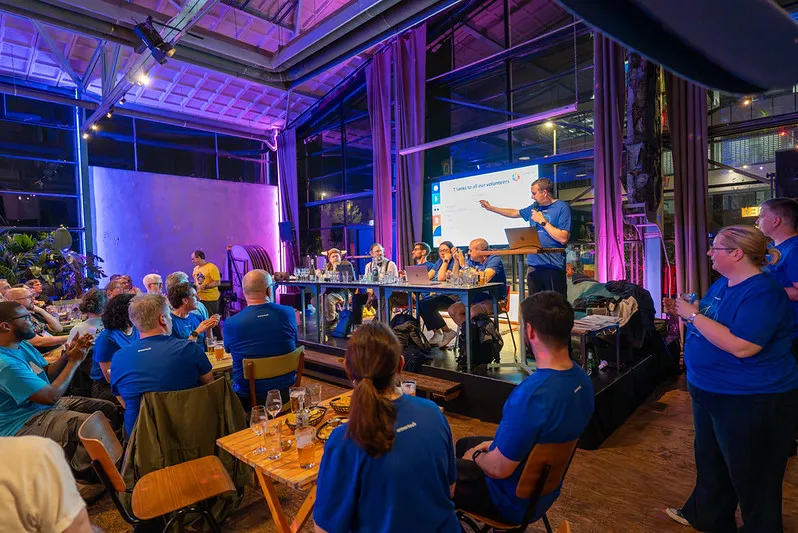
Our booth is always a great social hub, and the team hung out ready to greet and welcome attendees. A few of us also volunteered at DrupalCon, helping out during presentations, welcoming attendees and setting up the gorgeous DrupalJam stand which arguably made the nicest coffee (served with stroopwafels) at DrupalCon.
And on the note of volunteering, as has become something of a tradition, Annertech drove DrupalCon's Trivia Night.
Once again, Managing Director Stella Power was the Question Setter in Chief, while our Director of Technology Alan Burke was back on the mic, asking questions and keeping the audience entertained. Veteran Drupallers Hilmar Hallbjörnsson and John Cook joined Head of Client Success Ilana Doubell, Frontend Developer Tom Bamford and Head of IT Mike King at the judges table, and of course Annertechies also acted as runners – handing out and collecting answer sheets.
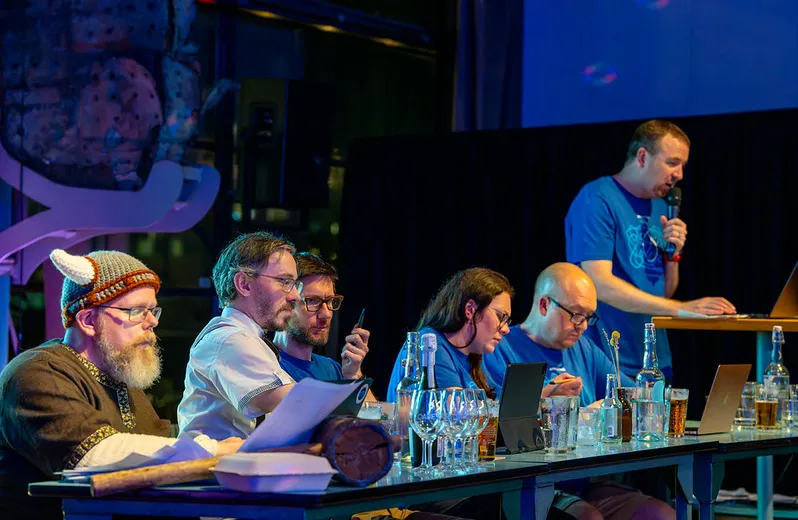
Trivia Night taught us a lot. But we had already learnt a lot over the course of the week. Here are the core insights, takeaways and standout moments as experienced by our team.
Community vibes
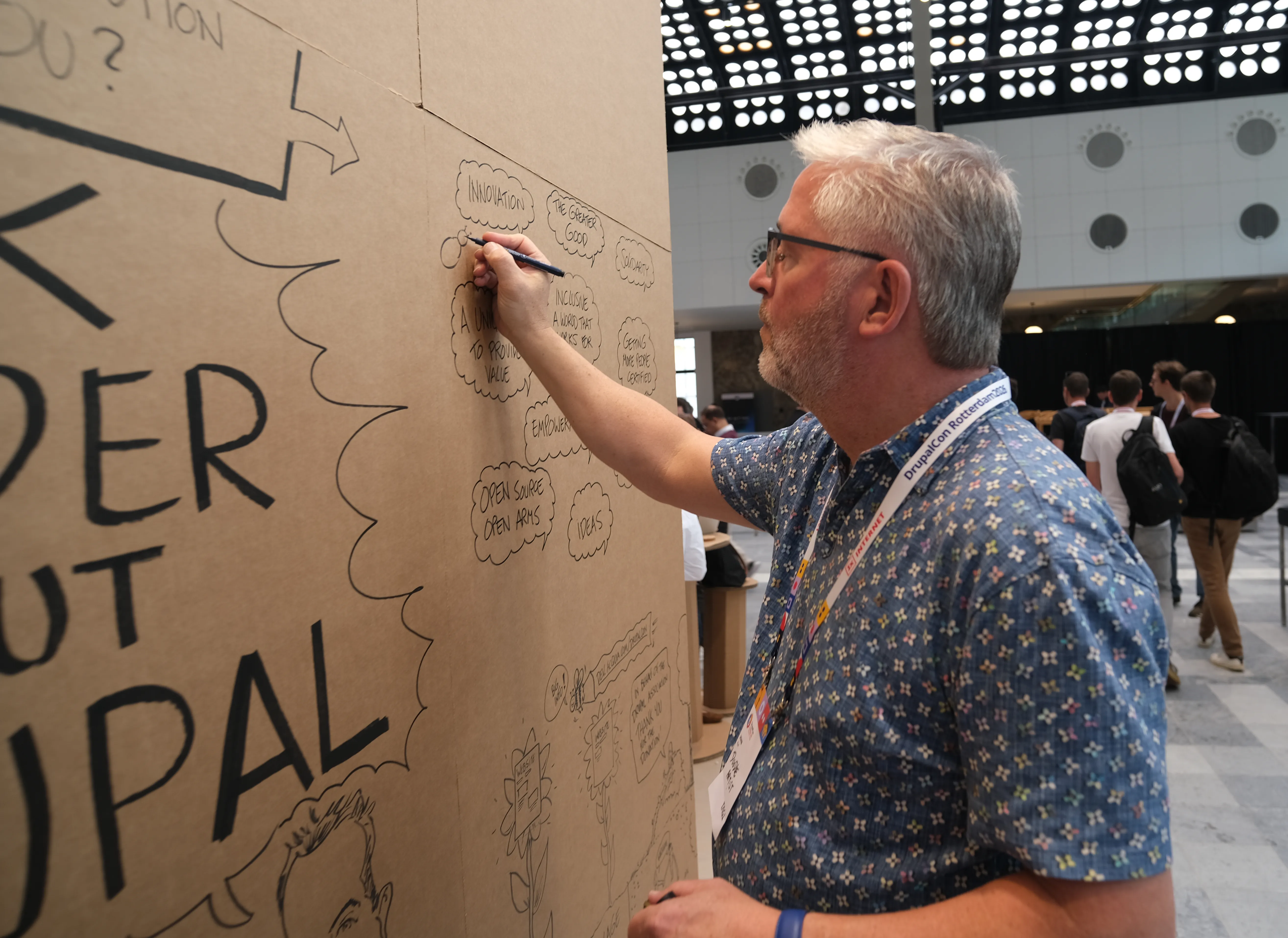
"I had fun taking all the photos,” said Frontend Developer and one of the official DrupalCon photographers, Petr Illek.
“It took me round the whole venue, and I learnt a lot. For example, did you know there is a Drupal-powered pinball machine? Plus the Trivia Night winners were mostly Czech! I also spoke with the event cartoonist, John Körver, and found out that he had no previous knowledge about DrupalCon, so almost everything he drew came straight from his discussions with attendees.“
For Frontend and LocalGov Drupal Lead Developer Tony Barker, the week balanced technical depth with time spent exploring the city.
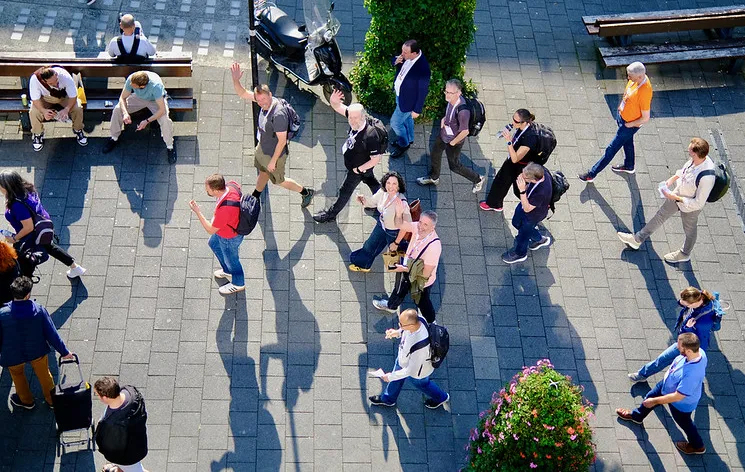
“The walking tour was a highlight, where a group got to see the architecture of Rotterdam on a wonderfully sunny day, walked through the Cube Houses, the famous market and riverside and even saw some surfing within a stone’s throw of the World Trade Center,” said Tony.
“Plus some Annertechies discovered a really cool Italian restaurant, we had a fantastic boat tour of Rotterdam, and Trivia Night is always a highlight.”
The hot topics at DrupalCon
The government summit
The Government Summit on Monday, 28 September brought together public sector leaders to discuss shared digital challenges.
Tony helped to organise the Government Summit, and was on hand at the summit to answer questions, alongside Jayvik Patel, Strategic Digital Services Manager at Luton Borough Council, who shared real-world insights on digital transformation with LocalGov Drupal.
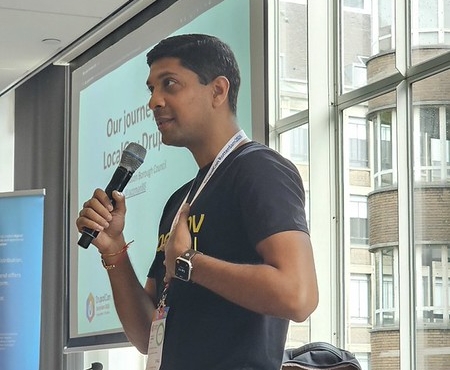
Jayvik Patel also showcased Luton Council’s LocalGov Drupal site (a partnership with Annertech and content designers to deliver the platform), which was completed in about 180 days.
Accessibility and media architecture
Accessibility was a major focal point across the conference schedule, featuring sessions led by our own team as well as community leaders.
Full-stack Developer Christopher Torgalson presented on Accessibility Worst Practices, flipping the traditional narrative.
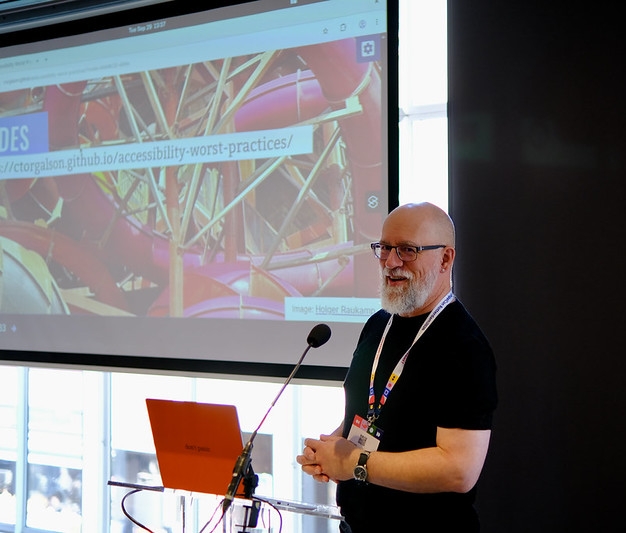
Christopher Torgalson presents to a packed room during DrupalCon Rotterdam. Photo: Petr Illek
“Christopher’s presentation provided a great checklist of common bad practices with finite, practical steps to improve accessibility,” said Tony.
Rather than simply running through a list of accessibility best practices, looking at the things we shouldn't be doing brings practical lessons on how seemingly small mistakes create significant barriers. It was nice to see that, as a result of the new EU rules, accessibility has become a first-class concern for all sites, and that there’s a lot of promise for LLM/AI tools to help with certain accessibility-related tasks.
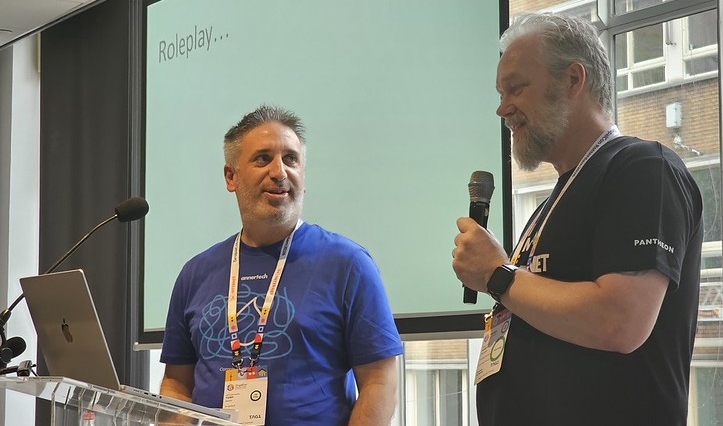
Tony Barker and Gareth Alexander's presentation was rather entertaining. Photo: Mike Gifford
In turn, Tony also took to the stage, delivering an entertaining but thought-provoking presentation with Gareth Alexander from the University of Edinburgh. Titled Same Image, Different Story: Why Drupal Needs Contextual Media Architecture, it focused on the challenges that media items in Drupal currently present, even with the use of AI, as well as possible solutions.
A specific challenge that Frontend Developer Layal Khatib flagged pertains to image alt text.
“Alt text is so important to the accessibility of a website, yet many a11y tools and/or AI won’t flag an issue as long as the alt attribute of an image is set. Yet the problem of keeping the same alt text no matter where the image is used, or cropping being endemic to the image no matter how many times or where the image is used, is too complex to solve overnight, and is very important.”
It's one of the issues that Tony and Gareth have been tackling, and they believe they are making tangible progress with contextual alt text.
“The talks by fellow Annertechies Christopher and Tony were just outstanding,” said UX Designer Ricardo Flores Galan.
“You could ‘hear the silence’ in the room as the audience paid attention and the focus was high. It’s comparable to the way you hear nothing during an extraordinary meal! I felt so proud to be part of the Annertech team.”
While at DrupalCon, Tony also attended the key accessibility session on the Editoria11y module.
“John Jameson’s presentation on features in v3 of Editoria11y showed how we can contribute to expanding capabilities to support analytics reporting baked into Drupal rather than depending on third-party software.”
Navigating the human and practical side of AI
Not surprisingly, AI formed a huge part of the discussions at DrupalCon. It even had two dedicated Summits – the AI Dev Summit, which was aimed at developers, and the Enterprise AI Summit, which explored AI, digital transformation, and the future of enterprise Drupal.
Enterprise AI Summit
Annertech’s Head of Customer Success, Ilana Doubell, attended the Enterprise AI summit. Her biggest takeaway was that the cost of doing nothing with AI is massive and increasing every day, “while the cost of working, when using AI, is significantly decreasing.”
“In short: standing still is no longer a safe strategy,” she said.
Another thing that struck Ilana was the fundamental shift in how digital content, search engines and website permissions interact with artificial intelligence.
“Unpublished does not mean unavailable to AI agents. We need to advise clients on how content is being accessed by AI agents,” she said.
“Our idea of what a user is needs to change, a user is no longer just human and we won’t know which one is consuming content (bot or human). Bots now provide the context of your business to your human users.”
AI Dev Summit
Backend Developer Erik Erskine and Frontend Developer Layal Khatib attended the AI Dev Summit.
Erik reflected on balance: AI can be bewildering, informative, personally draining and helpful all at the same time. The session “From Developer to Code Director: Strategic AI Acceleration for Drupal” highlighted that the key is to stay somewhere between complete AI rejection and vibe coding.
“We run the risk of 'intent debt' where we lose knowledge of why things are built a certain way. We are responsible for what we ship,” said Erik.
“From Take Back Your Autonomy, it was made clear that speed is easy, control is not,” said Erik.
“If you’re using an agent to code, can you clearly explain to a colleague what you asked for, what you kept, and what you rejected? If not, go back. AI makes a great thinking partner where you do the work but get a second opinion."
What struck Frontend Developer Layal Khatib was the kind of problems that AI wasn’t flagging.
“I attended several very different sessions about AI, content editing and site building,” she said. “What struck me the most was the type of problems presented by the speakers, problems that AI and automation didn’t or can’t flag. AI definitely isn’t a solo player – you need the amazing community, who are the brains behind Drupal, plus the power of AI, and then Drupal's future looks amazing.”
AI at DrupalCon
AI dominated many tracks, but Annertechies gravitated towards sessions exploring real-world implementation, workflow optimisation and human adoption.
Head of Projects Sean O’Connell found clarity in Culture mapping the human side of AI – A workshop to meet your people where they are.
“This was a good session which helped align my thoughts on where we are culturally with AI adoption. I had gone into DrupalCon with assumptions, but with no way to formalise my thoughts. During the workshop we categorised company culture into five colour groups and giving examples of what different categories look like with AI adoption. We then plotted where we were on trend lines on a handout sheet to show that companies don't neatly fit into each colour."
Both Sean and Designer Ricardo Flores Galan highlighted Encoding Expertise: How UX Research Powers Human-First AI, presented by Aidan Foster. This presentation had many Annertechies buzzing – from the content and bid writers, to those involved with projects, and the client success team.
“This was my favourite session of DrupalCon Rotterdam,” said Sean. “It demonstrated Content Review and how combining it with specific Tone of Voice rules can provide a platform to save lots of manual work. It showed content being reviewed against rules, and suggestions being provided for a human decision-maker. It could be extremely valuable to many of our clients, particularly the education and public sectors, where there are lots of content writers with no single unified tone of voice.”
Ricardo agreed, saying “in a time where most people expect AI to provide a quick and dirty solution that saves time, Aidan explained how multiple iterations could speed things up while defining what ‘good‘ looks like for your tone and voice.
“For example, starting small with capitalisation and iterating until you get a unified identity. Once defined, it could even connect design to tone and content, moving past 'content agnostic' design. It also opens opportunities in training AI agents – a vital step clients often overlook in favour of human review at the end.”
Sav Monzac was interested in how AI affects search and site building:
“In How Marketers win in an AI-first Search World, Anubhav Gupta explained why traditional SEO remains powerful and how content visibility increases when an LLM references content to build context. Improvements for AI crawlability can be made using existing tools like Looker Studio and Google Search Console,“ he said.
“Another personal standout was AI Powered Site Building: From Blank Site to Styled Pages in a Conversation by Francesco Pesenti and Francesco Quagliati. It highlighted tools reducing barriers to entry, making Drupal faster to set up and improving how quickly campaigns can be launched."
Digital sovereignty
Data and digital sovereignty was another really popular topic at DrupalCon, particularly in the Government Summit, where there was much discussion about organisations’ ability to maintain full control over their digital assets, data, software and underlying infrastructure.
This includes not being locked into, constrained by, or dependent on foreign tech monopolies or proprietary vendor ecosystems.
“There were so many presentations and panel discussions that kept highlighting one thing: A loud and clear message on digital sovereignty,” said Tony.
“Driving adoption of open-source tech needs awareness, advocates, policy and legislation. As long as there is the opportunity to stay with or adopt ‘Big Tech’, adoption of open source will be slower than is healthy for achieving digital sovereignty.”
Client Success Manager Josh Chamberlain looked into data governance via Data Sovereignty – From Vendor Lock-in to Digital Sovereignty.
“Digital sovereignty starts with control and is becoming part of policy – building tech stacks that make unbolting a service easier rather than complete lock-in to AWS/Google Cloud,” he said.
“Asking where the code lives and whether an exit plan exists is starting to appear in tenders. Drupal being a multi-vendor ecosystem makes this step easier.”
User experience
Sean drew parallels in user experience architecture from From Overwhelm to Opportunity: Designing a Personalised Career Journey for 350+ NHS Roles.
“I was interested in this as it directly crossed over with work we did on Skillnet’s Modern Methods of Construction website regarding user personas and needed information. They implemented a career questionnaire and role-suggesting mechanism. It was validating that the rest of the work they did almost mirrored our thinking exactly.”
Dashboard trackers
Ilana attended a session titled Your Dashboard Is Lying: Goodhart's Law and the Metrics Crisis in AI-Era Drupal Delivery.
“This session really forces us to take a hard look at what traditional metrics actually measure versus what creates real value for clients,” she said.
“When closing tickets becomes the primary metric of success, you end up with issues like tickets getting closed as 'cannot reproduce' or stuck in endless reopen loops without the underlying issue ever being solved. To fix this, we need to rethink our approach to measurement entirely. We should rather measure rework rate,” said Ilana.
Some other pointers from the session:
- Resolution time shouldn't stop when an agency says a ticket is closed; it should stop when the client agrees it is fixed. Tracking rework rates and reopen rates gives a far more honest picture of delivery quality.
- Measuring speed to first response is popular, but it tells us nothing about progress. We should be measuring time to a solution-based response.
- Prioritise business value over velocity. It is easy for clients to get distracted by visible surface tweaks like font changes while ignoring critical security and maintenance.
“Closed tickets do not equal value, only mapped tickets aligned directly to client goals deliver true value,” explained Ilana.
“We need to track scope stability and carried-over sprint items to keep everyone focused on what genuinely matters."
Developer interests
Beyond AI and accessibility, core technical sessions provided valuable validation and new directions for our development practices.
Our developers gathered technical key takeaways across several architectural developments:
- ECA (Event-Condition-Action): “I’ve seen a few talks about ECA. I want to study it a bit more because it changes the game from 'I’ll do X for Y' to 'I’ll facilitate X so that anyone can do Y,” said Erik.
- Single Directory Components (SDCs): “From The joy and power of SDC, finally for form inputs, Drupal theming has flipped from backend-first to frontend-first, where whole design systems can be built before anything else,” commented Erik.
- Drupal Canvas: “From Advanced Site Building with Drupal Canvas, Drupal has long lacked nesting small elements on a big page. While young and evolving, you can prepare for it now by embracing SDCs,” said Erik.
- Command line evolution: "From Joyful tour through CLI now in Drupal Core, it’s good to know this is coming. While Drush is a powerful tool, getting up and running with it can be a blocker for evaluators, so native CLI support in core is a great step forward,” said Tony.
Wrapping up an unforgettable week in Rotterdam
DrupalCon Rotterdam was a powerful reminder of why we love being part of this vibrant open-source community. From sponsoring the event and driving Trivia Night to leading packed sessions on accessibility and media architecture, our team threw themselves into every opportunity to learn, share and connect.
“I was really proud and impressed by the brand presence of Annertech at DrupalCon. I was proud of our cool new design – which was reinforced with our new display on the stand, as well as all of the Annertech team sporting their proud new T-shirts. It was great to see our presentations, presence at Trivia Night and the Government Summit. All-in-all I was happy of the bigger brand impact, and our peers, contribution partners and industry competitors know we’re here to stay,” said Josh.
Reflecting on the week, Managing Director Stella Power shared her thoughts on what makes DrupalCon so valuable for our team: “As a fully distributed agency with roots across Ireland and the UK, events like these give us a rare chance to gather in person, collaborate and share a few stroopwafels along the way. Beyond the fun and catching up with friends, the insights brought back by Annertechies directly shape how we support our clients – helping them build smarter, safer and more accessible digital platforms.”
After more than two decades in journalism, Alison now collaborates with Annertech's clients to ensure that their content is the best it possibly can be.
Ah Vienna: Annertech’s highlights from DrupalCon Europe 2025
DrupalCon Barcelona: Our highlights
DrupalCon Lille: Our highlights
Got an ambitious digital project on the horizon?
Whether you are navigating the shift towards AI, looking to streamline your content governance or planning your next big open-source project, we would love to help you bring those ideas to life. Get in touch with our team today to start the conversation.